When you buy through links on our articles, Future and its syndication partners may earn a commission.

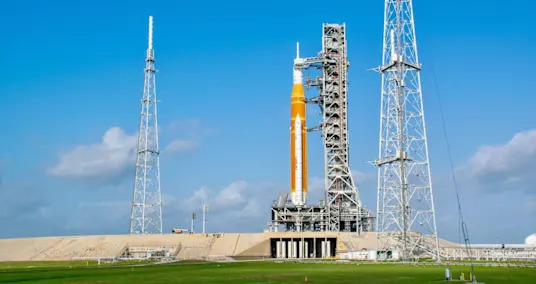
CAPE CANAVERAL, Fla. — NASA continues to target Wednesday (April 1) for the launch of its Artemis 2 mission to fly astronauts around the moon, and says teams are tracking zero technical issues leading up to the liftoff window.
That Artemis 2 launch window opens on Wednesday at 6:24 p.m. EDT (2324 GMT) and extends for two hours. If the launch is delayed or scrubbed for any reason, there are more opportunities for liftoff through April 6. But still, NASA officials are voicing a high degree of confidence in the mission's chances of launching on the agency's massive Space Launch System (SLS) rocket on time. Notably, NASA completed a flight readiness review for the mission ahead of SLS' rollout to the pad on March 20, and has since flagged no issues or risk acceptances that need closing before clearing Artemis 2 to launch.
"Since that time, all of our operations have been going very smoothly," Lori Glaze, acting associate administrator for NASA's Exploration Systems Development Mission Directorate, said during a mission status update on Sunday (March 29). "Our flight systems are ready, the ground systems are ready, our launch and operations teams are ready, and our flight operations team in Houston are also ready. The crew arrived yesterday, and I know that they're ready – they are more than ready."
"There are little things that we find as we go that we're working right there, but none of them are threatening the first right now," Glaze said.
The biggest thing currently standing in the way of an April 1 liftoff is weather. There is currently a 20% chance of a weather violation on Wednesday due to potential cumulus clouds in the lower troposphere.
But hopes are high for the big day: Artemis 2 will be the first crewed mission of NASA's Artemis program, which endeavors to ultimately return astronauts to the surface of the moon and build an eventual base there. The mission will fly NASA astronauts Reid Wiseman, Victor Glover and Christina Koch, as well as Canadian Space Agency astronaut Jeremy Hansen, on a 10-day mission around the moon aboard a spacecraft called Orion.

To be clear, the astronauts aboard Orion for Artemis 2 won't actually enter orbit around the moon, but will instead slingshot around the lunar far side in a figure-eight trajectory that puts the spacecraft on a direct course back to Earth. The mission is designed as a second test flight for Orion, which has adventured beyond Earth orbit before — but never with a crew onboard.
The first part of NASA's Artemis program, Artemis 1, launched in November 2022, and successfully flew an uncrewed Orion into lunar orbit for about a month.
If all goes according to plan, Artemis 2 will pave the way for the next mission in the program, Artemis 3. Artemis 3 is slated to launch Orion to Earth orbit where the spacecraft will test rendezvous and docking operations with the selected Artemis lunar landers. The success of this demonstration will lead to Artemis 4, which NASA is planning as the first crewed lunar landing since the end of the Apollo program more than 50 years ago.
"We are getting very, very close — and we are ready," Glaze said.
latest_posts
- 1
 21 Incredibly Interesting Contemplations To Observe Consistently
 - 2Indian Health Service is digging out of decades-old construction backlog for medical buildings
- 3A Manual for Nations to Head out To
- 4Czech Republic's new premier: No money for Ukraine
- 510 Activities to Lift Your Consume and Bust Your Stomach





- Volkswagen in talks with defence firms on use of Germany plant: CEO
- Instructions to Pick the Ideal SUV Size for Seniors
- IDF says up to 90% of Iran’s weapons industry could be hit within days
- Vote in favor of your Number one method for praising a birthday
- Vietnam rethinks its flood strategy as climate change drives storms and devastation
- Etymological Investigation Disclosed: A Survey of \Dominating New Tongues\ Language Learning Application
- Amateur's Manual for Venture Strategies for Tenderfoots
- Investigating the World's Chief Authentic Urban communities to Visit
- Between 600 to 800 aid trucks entering Gaza daily since start of ceasefire, COGAT confirms